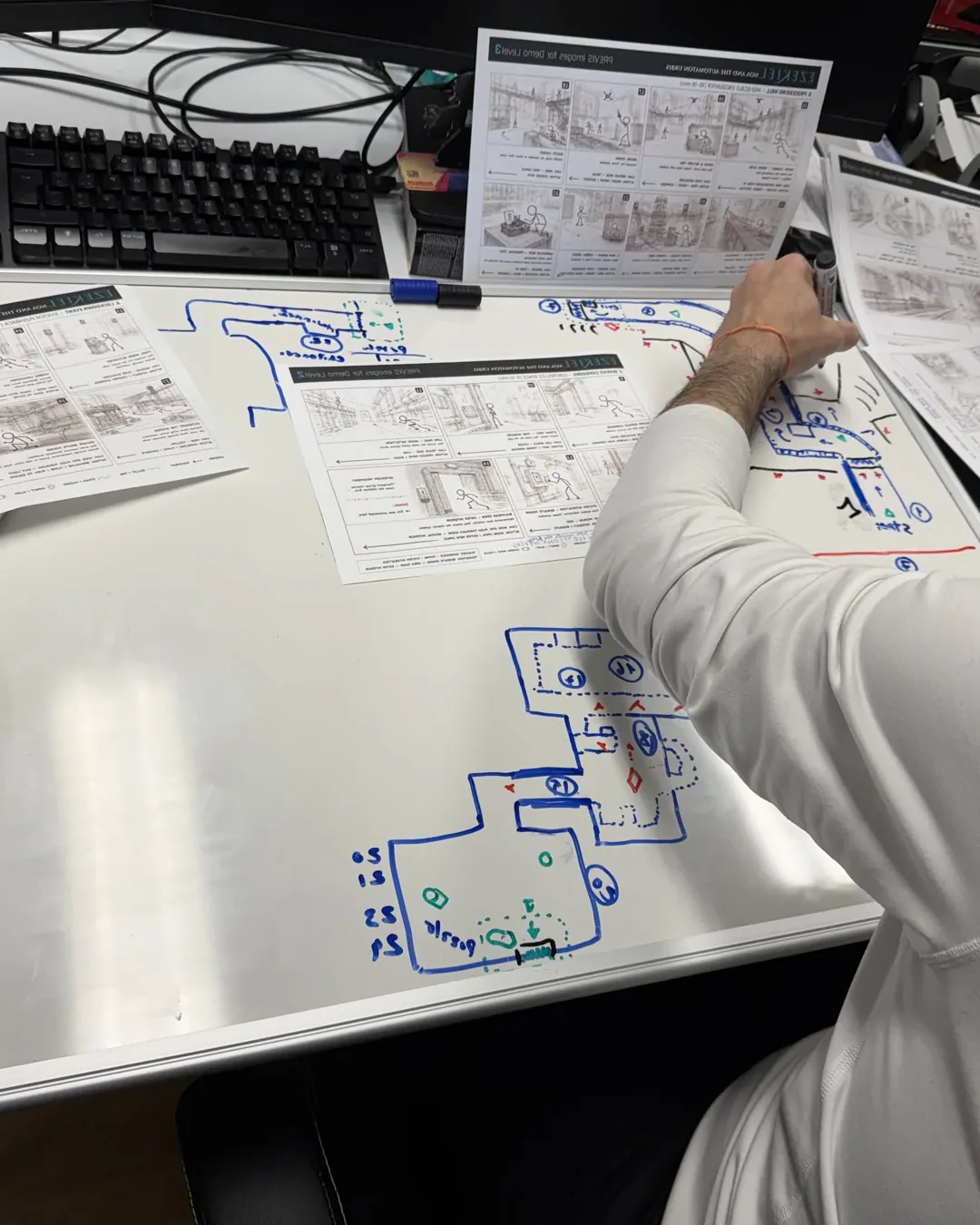
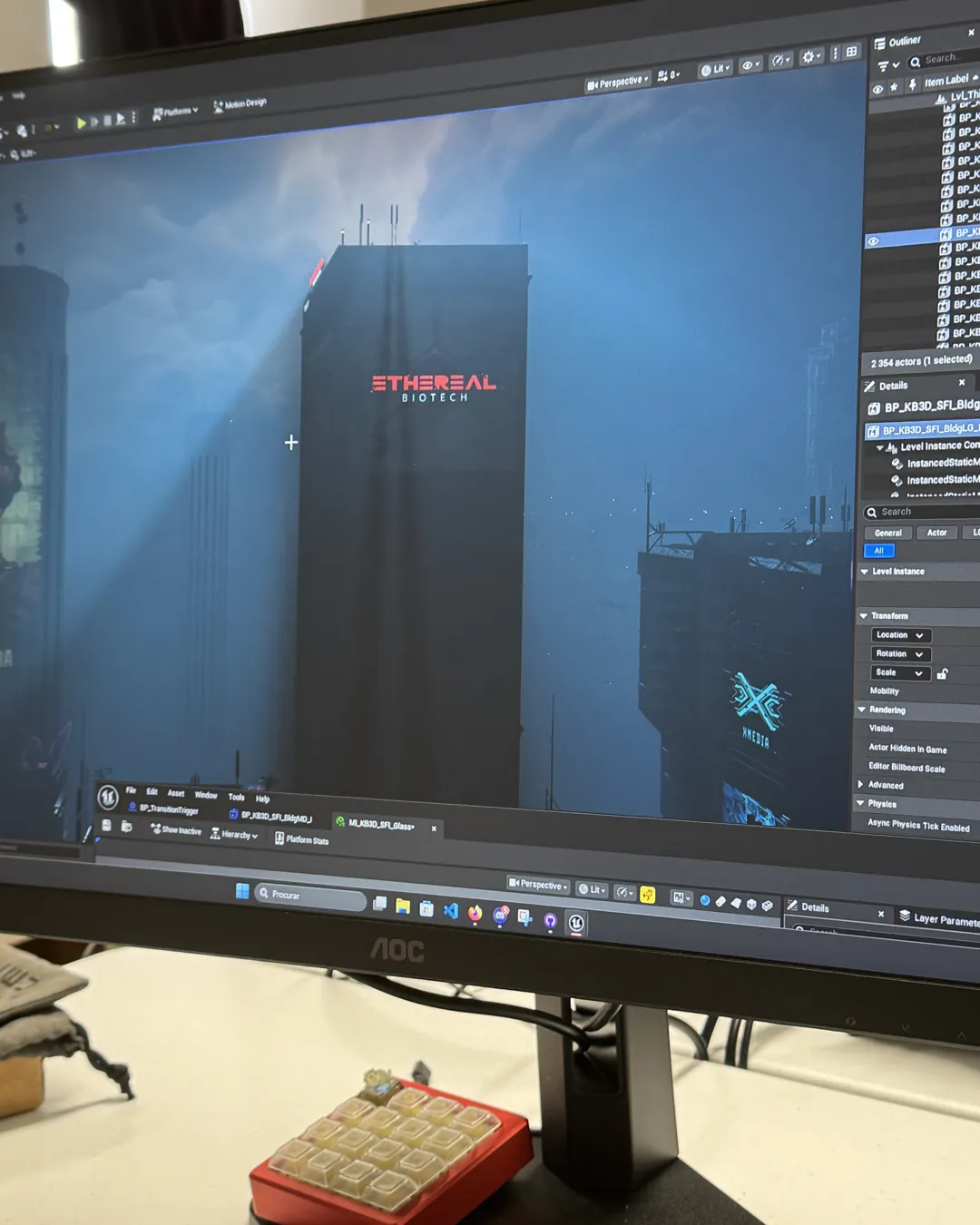
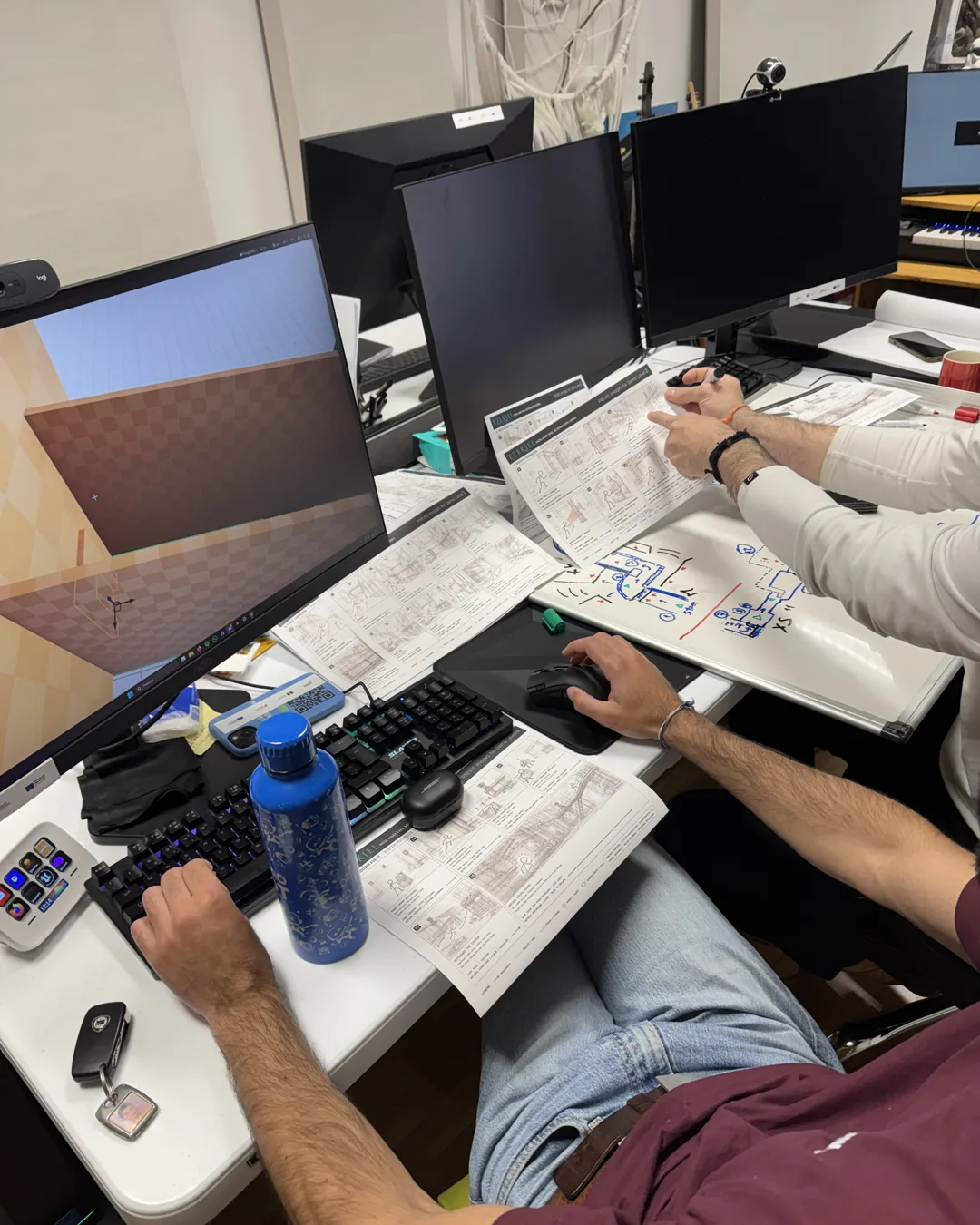
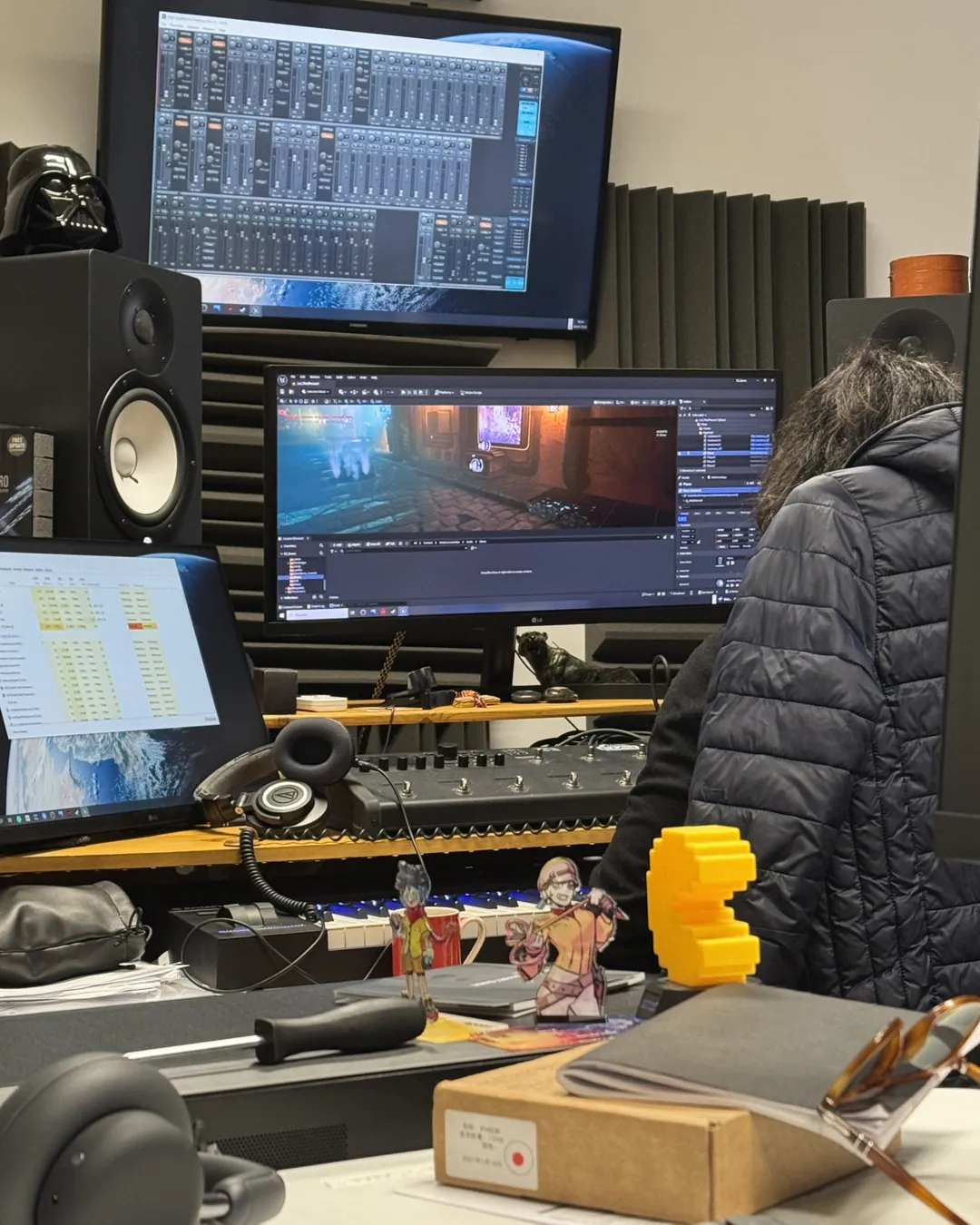
Ezekiel: Noa and the Automaton Urbis is the game NC Gaming is building in Funchal, Madeira. It is a narrative-driven RPG with a steampunk-cyberpunk world, the first chapter of a saga its founder, Norberto Cruz, has been writing for 30 years. Cruz is an internationally acclaimed composer and artistic director who has performed at Teatro Alla Scala, collaborated with Andrea Bocelli and Placido Domingo, and received the Medal of Representation from the President of the Italian Republic. We came in as executive producer. The brief was the kind we like: a real game, a real team, and a demo that had to get better and ship.
"Between two worlds, one will rise."
The world
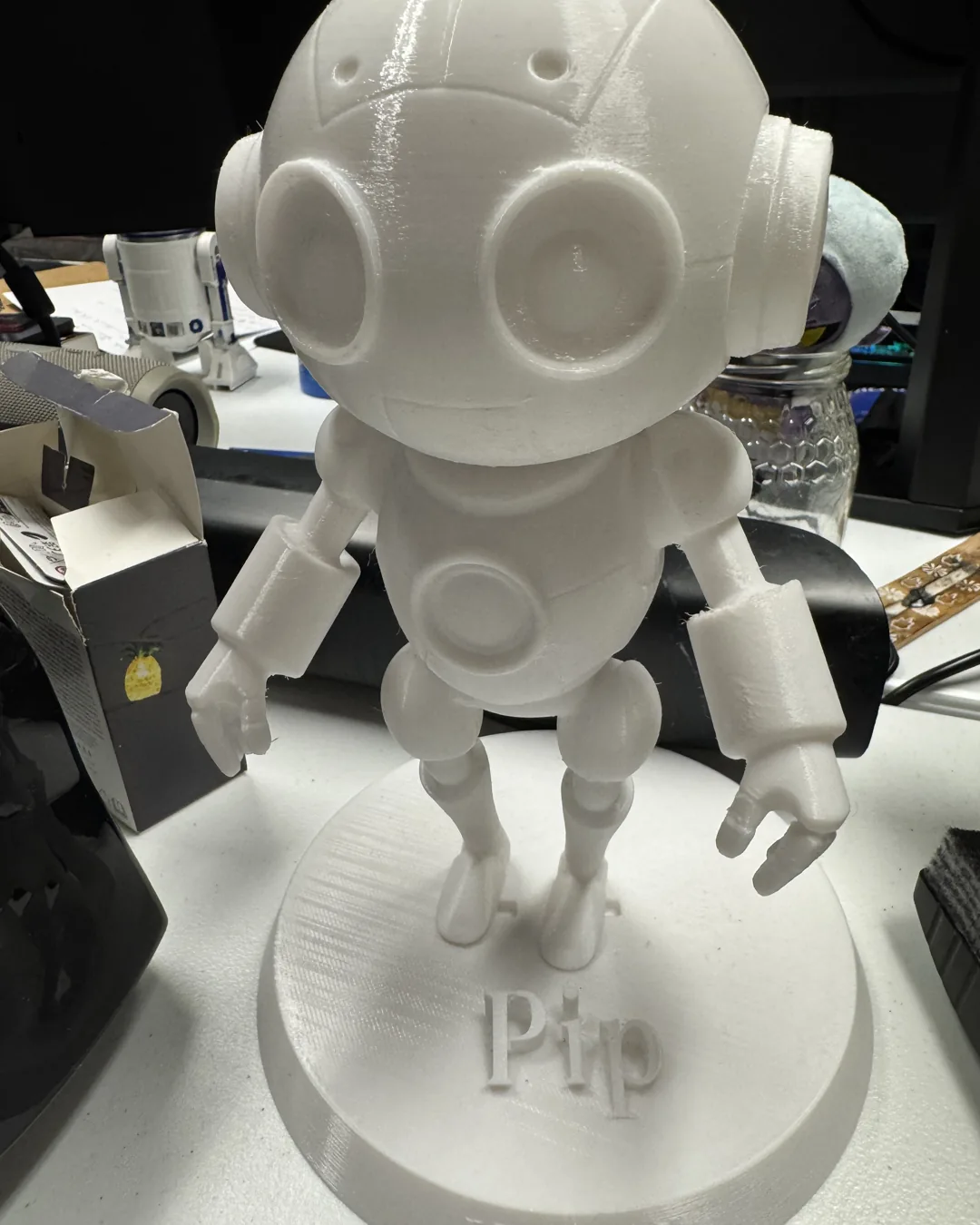
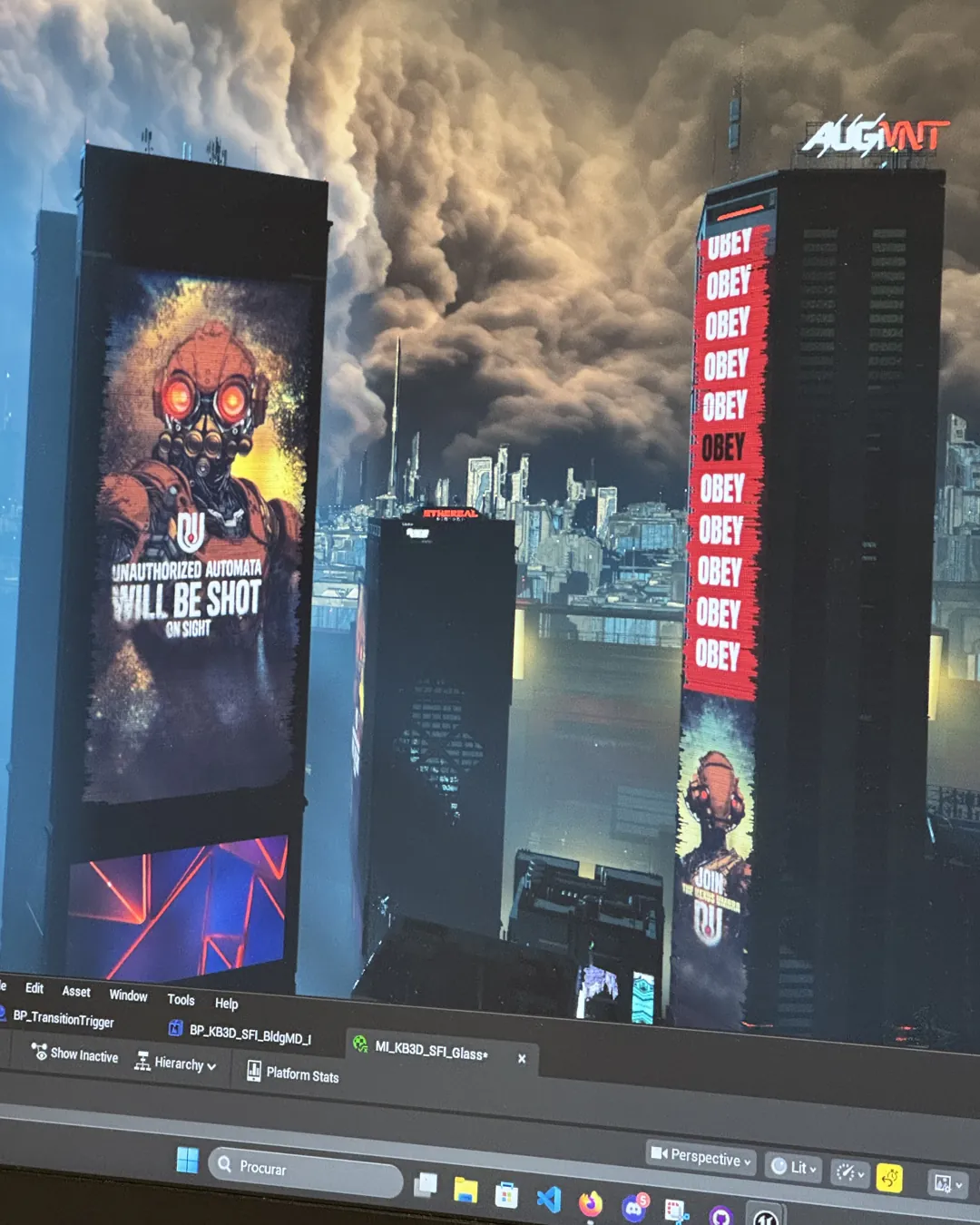
Ezekiel's world is split in three by the Great Fracture, the war between humanity and the machines it built: Humanopolis, a human city forged from salvage and memory; the Automaton Urbis, a machine city where crystalline towers pulse with data and mechanical gardens bloom in wire and light; and a lawless neutral zone between them. You play Noa, a scavenger and mechanic, on a mission to find his daughter Tris after she is taken across the border. Tris is twelve, with an inexplicable connection to machines. Pip, a small automaton, follows Noa with a loyalty he does not expect. The journey makes him question everything he believed about the other side.
The design leans on its references and earns them: the moral choices of Mass Effect, the world design of Dishonored, the visual style of Arcane. A Moral AI system means your choices shape the narrative, the NPC relationships, and which missions open to you. Seven factions pull at the story from different directions. Ezekiel is single-player, narrative first, and built as the opening of a five-game arc that spans more than a hundred years. It has already been shown at Gamescom and Tokyo Game Show. It targets PC on Steam first, with PlayStation and Xbox planned.
What we actually do
Executive producer, the way Marathon Variety runs it on Ezekiel, means we are in the work, not next to it. On a small NC Gaming team shipping an Unreal Engine 5.7 RPG, the engagement is three jobs:
- Run production: scope, sequencing, and the operating rhythm that keeps a small studio shipping.
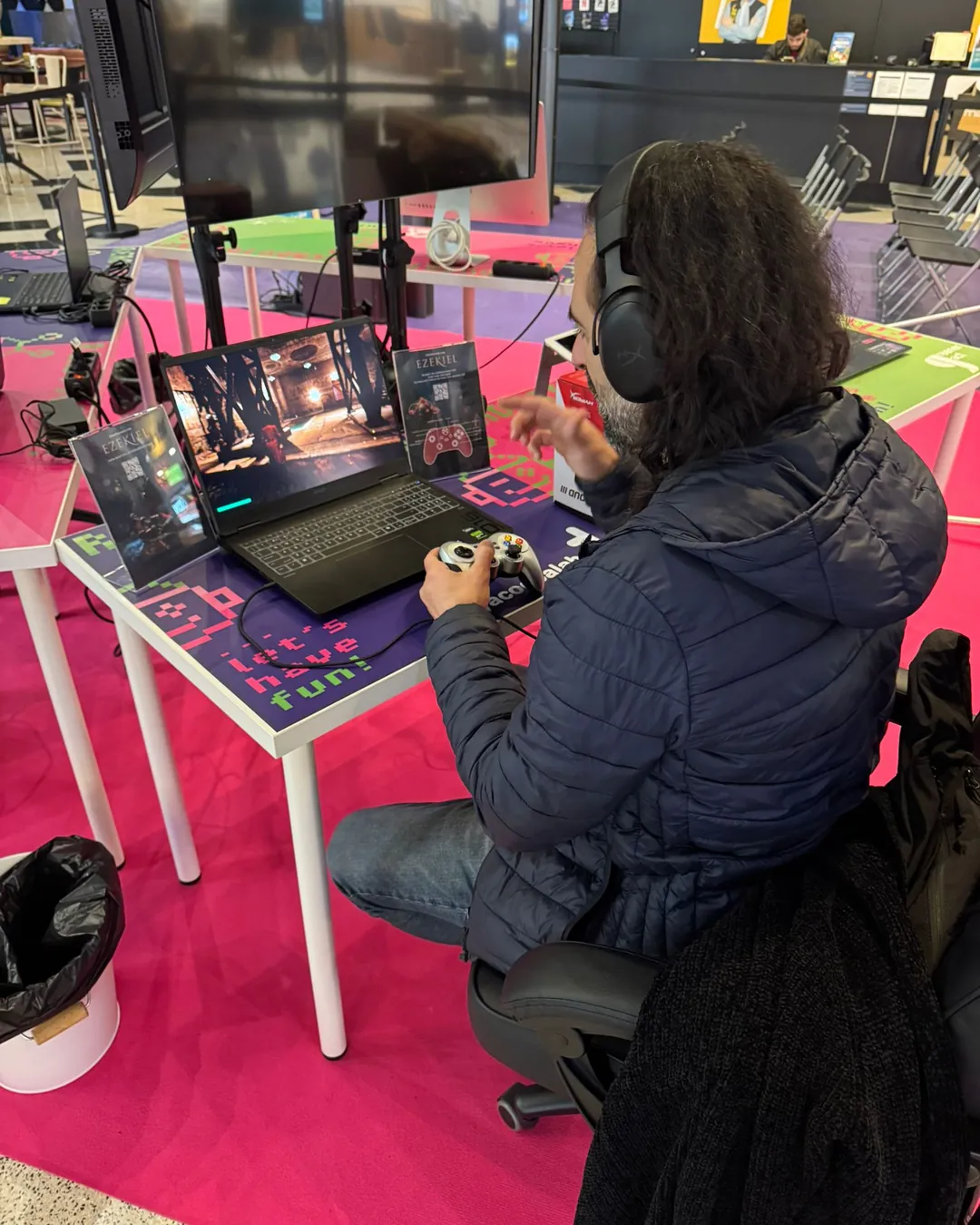
- Own and rebuild the new demo, the slice that goes in front of players and partners at events like the eGames Portugal showing.
- Bring AI into the studio's toolchain, where most of the engineering went, in a way that assists the team instead of replacing anyone on it.
That last part matters to how we work. The creative core of Ezekiel, the world, the characters, the moral weight of a choice, belongs to the people who have spent years on it. AI does not get to author that. What it can do is take the drudgery off the team: the relearning, the boilerplate, the canon contradictions that surface three weeks late. We taught the crew to use it for exactly that, and built the tooling to make it safe.
The AI tool, on the studio's rails
The Ezekiel MCP is a custom Unreal integration we built for NC Gaming: a local MCP server paired with an Unreal Editor plugin, targeting Unreal Engine 5.7, the version the studio runs. A generic assistant relearns the project on every prompt and contradicts the canon as often as not; this one loads NC Gaming's own design docs as canon, 13 documents and roughly 62,000 words of world, characters, factions, regions, visual and audio direction, the demo implementation, the combat-framework reference, and the Moral AI design. The agent comes in already knowing the rules: that a demo encounter caps at five to seven soldiers and two agents, which Blueprint systems run the demo level, what the canon says before it changes anything.
The safety model is the part we lead with, because it is what lets a studio trust a tool near its game. Every Unreal operation is a typed, validated, logged tool. There is no open-ended script executor in the default path. It never writes .uasset or .umap files directly. Destructive actions need an explicit confirmation; deleting an actor means repeating its exact path back. A deterministic mock runs alongside live Unreal, so a change can be tested with the editor closed. The agent is powerful inside the rails the studio set, and powerless outside them, on purpose. It connects five coding clients (Codex Desktop, Codex CLI, Claude Code, Cursor, Gemini), runs local-first and offline, and asks for nothing from the cloud.
The server is half of the work. The other half is the agent that uses it. We built a specialized Unreal Engine agent to go with the MCP: a durable behavior contract, plus a set of skills, that makes a coding agent act like a careful Unreal developer instead of a generalist with editor access. It inspects before it edits. It treats the MCP as the authority on editor and asset state rather than guessing from filenames. It preserves designer and artist work, never hand-edits a binary asset, and verifies through the strongest available path, a targeted build, a Blueprint compile, a map check, before calling anything done. When a check cannot run, it reports UNVERIFIED instead of bluffing. The contract is grounded in the MCP's real tool surface, 132 safety-classed tools across 35 categories, and held to it by an evaluation harness of behavior fixtures, including a corpus of prompt-injection attacks it has to refuse.
We are extending it from a lore-and-rules base into an expert layer for the whole toolchain: IK rigging and retargeting, animation, Mixamo usage, level design, C++, the Gameplay Ability System, and Blueprints. Ezekiel is the proving ground. The generalized version, Brainjuice MCP for Unreal, targets UE 5.5 and up so any studio can use it, and is being commercialized through Brainjuice Labs. It ships free and is pre-launch.